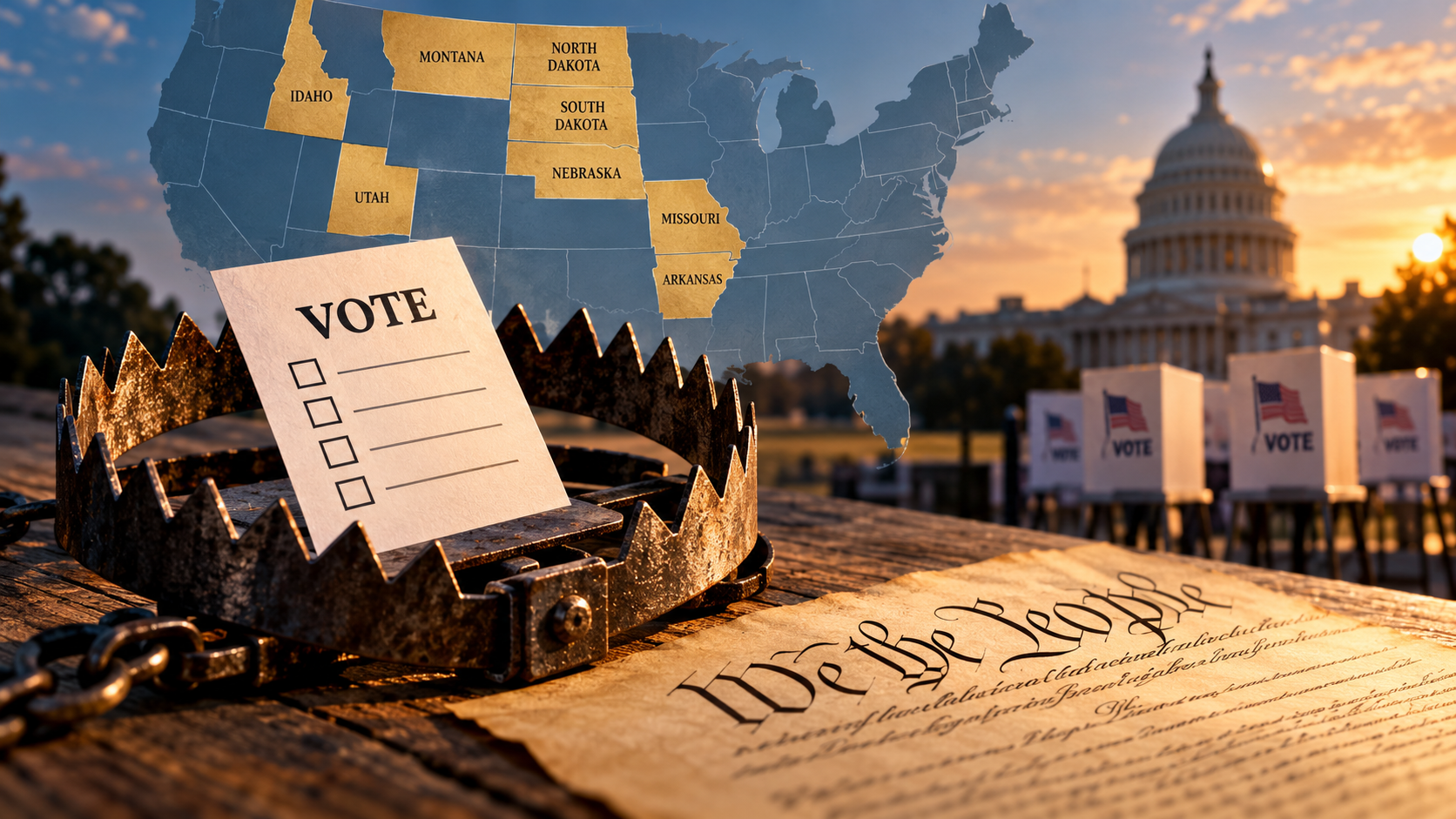
Election Day is November 3, 2026. If you are looking at a ballot measure and wondering how to get beyond campaign slogans, set a timer for 15 minutes and follow this practical research method.
As of October 22, Ballotpedia reports 145 statewide ballot measures for November 3 across 39 states. California and Colorado each have 14 statewide measures, among the largest state totals. Your own ballot may also include local questions, which have their own official materials and jurisdiction. Counts and ballot content can change, so use the national overview as a starting point, not a substitute for the final information from your state or local election office. See Ballotpedia’s 2026 ballot-measure overview and your state’s official election website.
The purpose of this exercise is not to settle every policy debate in a quarter of an hour. It is to identify what a measure would do, who put it forward, which part of government it affects, and where to find the strongest primary sources. Those skills transfer to every future ballot.
Your 15-minute ballot-measure check
Minutes 0–3: Read the actual ballot language and official guide
Start with the official sample ballot or voter information guide, not a campaign mailer, social post, or headline. Read the measure’s ballot question, summary, and proposed text if the guide links to it.
Ask yourself: What action would a “yes” vote authorize or require? What happens if it does not pass? Notice whether the measure amends a constitution, changes a statute, authorizes borrowing, or asks an advisory question. Those are different mechanisms with different effects.
If the summary sounds broad, look for operative verbs in the full text: require, prohibit, authorize, appropriate, repeal, or amend. The summary can orient you, but the text defines the proposal. For a local measure, use the official materials from your county or city election office.
Minutes 3–5: Find out who placed it on the ballot
Identify its origin. Was it referred by the legislature, proposed through a citizen initiative, placed by a commission, or submitted as a referendum on an existing law? The official guide or election authority usually identifies the measure type and the process that brought it forward.
This matters because origin helps explain what voters are being asked to decide. A legislative referral may have a bill or resolution history. A citizen initiative may have a sponsor committee and a petition record. A referendum may ask voters whether an enacted law should take effect.
Do not treat the sponsor’s identity as proof that a proposal is good or bad. Treat it as a research lead: find the relevant bill, resolution, initiative filing, or committee record, then confirm the measure’s final status with the election authority.
Minutes 5–8: Trace the fiscal impact
Find the official fiscal analysis, fiscal note, or financial summary. Look for the effect on revenue, spending, borrowing, local budgets, and the timing of costs. If a measure creates a program or changes a tax, ask which public entity would administer it and where the money would come from.
For bond proposals, distinguish the amount borrowed from the likely repayment source and period. For tax measures, check who pays, which government receives the revenue, and whether the text directs money to a particular purpose. Fiscal estimates are projections, not guarantees; read the assumptions and note what the analysis says it cannot estimate.
Official voter guides often include fiscal information or link to it. As one state-specific example, California’s nonpartisan Legislative Analyst’s Office proposition analyses explain the November 3 propositions, including fiscal effects. For another state, look for the comparable analysis from its legislative fiscal office, auditor, or election authority.
Minutes 8–10: Identify the government level and jurisdiction
Write down which government level the measure changes: Local, County, State, Regional, or Federal. Then name the specific office, district, agency, or public body that would implement it.
This five-layer map is a useful way to keep jurisdiction clear:
- Local: cities, towns, school districts, and other local bodies.
- County: county government and countywide services.
- State: the state constitution, legislature, executive agencies, or courts.
- Regional: councils, authorities, or special districts serving multiple communities or counties.
- Federal: national institutions and powers established under the U.S. Constitution.
Not every measure touches every layer, and “regional” structures vary by state. Follow the text: who receives authority, who carries out the change, and where does that authority begin and end? This is a practical way to understand dual federalism, the division of responsibilities among governments, without assuming that every level has the same role.
Minutes 10–12: Read arguments for and against
Use the official voter guide’s arguments for and against, when provided. Read both, then return to the measure’s text. Mark each claim as one of three things: a description of what the proposal does, a prediction about what may happen, or an opinion about what should happen.
Check whether a claim is supported by a source, whether it addresses the measure’s actual provisions, and whether the opposing argument responds to the same question. Campaign arguments can help you find important concerns, but they are advocacy, not a replacement for the legal text or fiscal analysis.

Minutes 12–15: Check who is funding the campaign
Look up the committees supporting and opposing the measure in public campaign-finance disclosure records. Start from your state election or ethics agency’s campaign-finance portal. Search by the measure number, committee name, or proposition title, then review reported contributions and major expenditures.
Ask: Who are the largest contributors? Are donations coming from individuals, businesses, unions, advocacy groups, or other committees? What are the committees spending money on? Funding can show which organized interests are investing in the campaign. It does not, by itself, establish whether an argument is accurate.
Disclosure systems differ by state. California voters, for example, can use the Secretary of State’s Propositions and Ballot Measures Campaign Finance Activity page. For your state, search the official government site for “ballot measure campaign finance disclosures.” Do not assume federal campaign-finance records include state ballot campaigns.
Keep the ballot measure in perspective
A ballot measure is one moving part in a much larger governing system. One “yes” or “no” choice may alter a statute, constitutional rule, tax, bond authorization, or administrative responsibility. Its consequences depend on who implements it, what authority they have, and how it interacts with existing law.
Understanding government is like understanding the body or an aircraft: when something is not working as expected, you need to understand the systems and connections before you can troubleshoot the problem. A headline can point to a symptom. The measure’s text, fiscal analysis, jurisdiction, and implementation process help you examine the machinery.
That is why this method is useful beyond November 3. Use it again for local initiatives, school-district questions, county proposals, and future statewide ballots. When you have more time, compare the official guide with the bill history, agency rules, meeting records, and public disclosures. When something remains unclear, contact the responsible public office with a specific, respectful question. Building working relationships and knowing the system support more informed, systematic engagement.
Continue your civic education
For students who want a deeper foundation, the Center for Self Governance’s School of Societal Self Governance offers a progression from Apprentice to Journeyman to Professional certification. Apprentice study builds foundational knowledge of government structures, history, state constitutions, and local government. Journeyman training develops systematic political understanding through sequential classes and exercises. Professional study adds team development, game theory, and systematic messaging.
Explore upcoming CSG classes or begin with Foundations in Self Governance. The goal is not to become an expert on only one issue. It is to learn a transferable civic skill: how to locate authority, understand jurisdictional boundaries, and engage constructively with the people and institutions involved.
The Declaration of Independence closes: “And for the support of this Declaration, with a firm reliance on the protection of divine Providence, we mutually pledge to each other our Lives, our Fortunes and our sacred Honor.” Its mutual-pledge principle can be renewed for the 21st century through informed citizens who learn together, build relationships, and take responsibility for the systems they share.
Learn the System → Lead with Purpose → Govern Your Future.