In our ongoing exploration of the machinery of government, we must confront a challenge that frequently disrupts local enterprise, property rights, and community harmony: regulatory overreach.
Too often, citizens experience the effects of institutional weaponization only after a notice of violation lands on their desk, a zoning restriction abruptly halts a family business, or an administrative decree alters long-standing community practices. At the Center For Self Governance, our pedagogical approach moves beyond reacting to isolated disputes. Instead, we teach students how to examine the structural mechanics of power, analyze jurisdictional boundaries, and engage systematically to protect constitutional design.
In this lesson, we will examine the anatomy of regulatory overreach, identify how administrative bodies stretch beyond their defined limits, and outline the systematic tools required to navigate and prevent bureaucratic friction before it impacts your home and livelihood.
Learning Objectives
By the end of this foundational study, students will be able to:
- Define the structural origins of administrative expansion and delegation of authority.
- Identify the specific jurisdictional markers that distinguish statutory law from administrative rule-making.
- Apply systematic mapping tools to evaluate local and regional agency actions.
- Build cooperative, relationship-driven engagement strategies to maintain constitutional boundaries.
Understanding the Machinery: Statutory Authority vs. Administrative Rule-Making
To understand how regulatory overreach occurs, a student must first understand how modern governance structures operate. In a properly functioning constitutional republic, legislative bodies create laws through public debate and constitutional checks. However, over the past century, the rise of administrative bodies has shifted considerable authority to unelected agencies.

When administrative agencies operate outside their statutory mandate, or when overlapping jurisdictions create ambiguous enforcement zones, citizens experience what is commonly called “regulatory overreach.” This is rarely a sudden malicious decree; rather, it is the natural consequence of unchecked system expansion.
Administrative drift occurs when agencies interpret vague legislative language to expand their own sphere of control, gradually eroding the clear boundaries established by dual federalism.
As we cover in our flagship School of Societal Self Governance, learning to read the machinery of government requires examining how authority flows from the foundational documents down to regional and municipal boards.
Spotting the Early Indicators of Institutional Weaponization
Regulatory friction does not materialize overnight. It typically follows a predictable sequence of structural shifts. By learning to spot these early indicators, students can transition from passive spectators to proactive community leaders.
1. Ambiguity in Jurisdictional Scope
When an agency or board attempts to regulate matters outside its explicit constitutional or statutory authorization, it signals a boundary breach. A classic example involves local planning commissions or environmental boards adopting directives that bypass state legislative oversight.
2. Procedural Irregularities
Notice requirements, public comment periods, and transparent deliberation are essential checks within the administrative process. When procedures are abbreviated, obscured, or inconsistently applied, the risk of arbitrary enforcement increases significantly.
3. Selective Enforcement Patterns
Weaponization often manifests not through new rules, but through the selective enforcement of existing, obscure regulations against specific landowners, entrepreneurs, or community groups.
Please note: Reviewing historical case studies in courses such as Systematic Politics: The Evolution of Cooperation provides students with objective frameworks to analyze these patterns without falling into partisan polarization.
Shifting from Reaction to Systematic Engagement
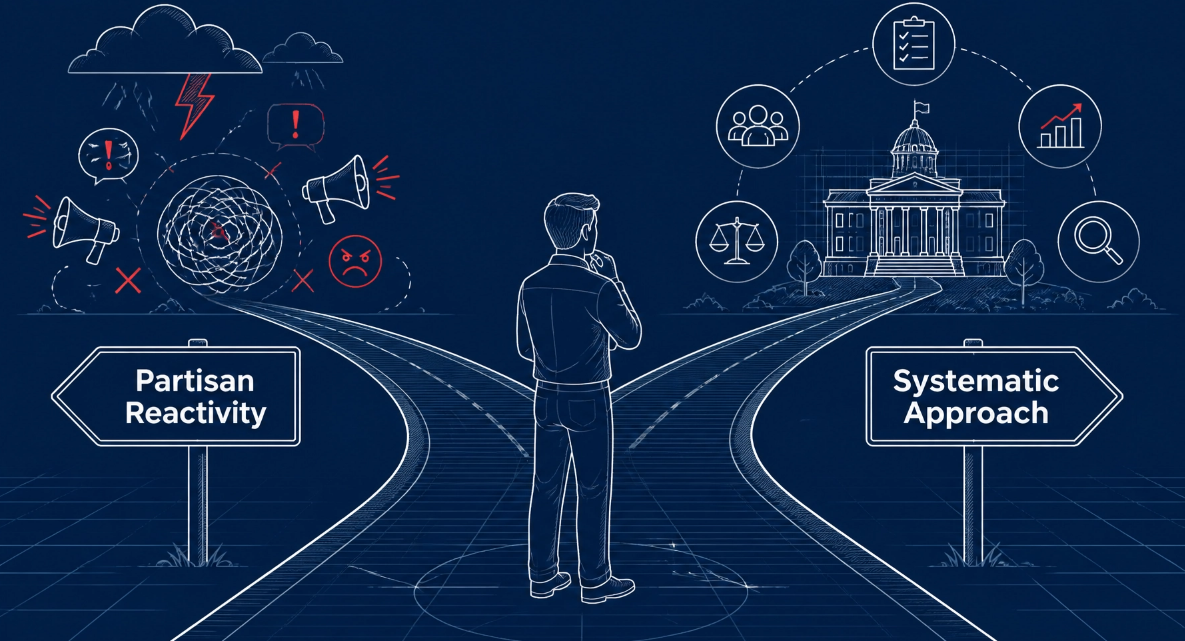
When individuals or business owners face unexpected regulatory hurdles, the instinct is often to launch into adversarial, single-issue protests. While understandable, emotional reactions rarely alter long-term structural outcomes.
Instead, CSG trains students in systematic engagement. This methodology relies on three core pillars:
- Mapping the Power Structure: Before attending a public meeting or submitting formal commentary, students must map out who holds statutory authority, what specific jurisdiction they operate under, and where their funding and mandates originate.
- Building Constructive Relationships: Sustainable governance relies on cooperative communication. Establishing professional, respectful dialogue with local officials and board members allows citizens to present clear, evidence-based boundaries before disputes escalate.
- Documenting Procedural Accuracy: Maintaining meticulous records of meetings, correspondence, and agency guidelines ensures that any communication remains anchored in verifiable facts.

For those looking to deepen their practical skills, exploring resources like our County Government Training Modules offers step-by-step guidance on how county commissioners and local boards interact with state and federal guidelines.
Practical Steps for the Modern Keeper of the Republic
To safeguard your community and property against overreach, please implement the following systematic practices in your daily civic life:
- Review foundational documents: Familiarize yourself with your state constitution and local municipal charters. Knowledge of your specific jurisdictional terrain is your strongest asset.
- Attend administrative meetings regularly: Do not wait for a crisis. Observe how local school boards, zoning commissions, and county councils conduct their business during routine sessions.
- Enroll in structured certification pathways: Advance your civic education by participating in our apprentice and journeyman courses, designed to give you concrete analytical tools. You can explore upcoming classes directly through our Course Catalog.
Conclusion
Regulatory overreach and institutional weaponization are formidable challenges, but they are not insurmountable. When everyday citizens commit to understanding the full machinery of government, rather than merely complaining about its symptoms, they reclaim their role as the maintenance crew of the Republic.
We invite you to continue your education, build strong local teams, and master the principles of self-governance. The path to a secure constitutional future starts with learning the system.