

Description
Course Summary
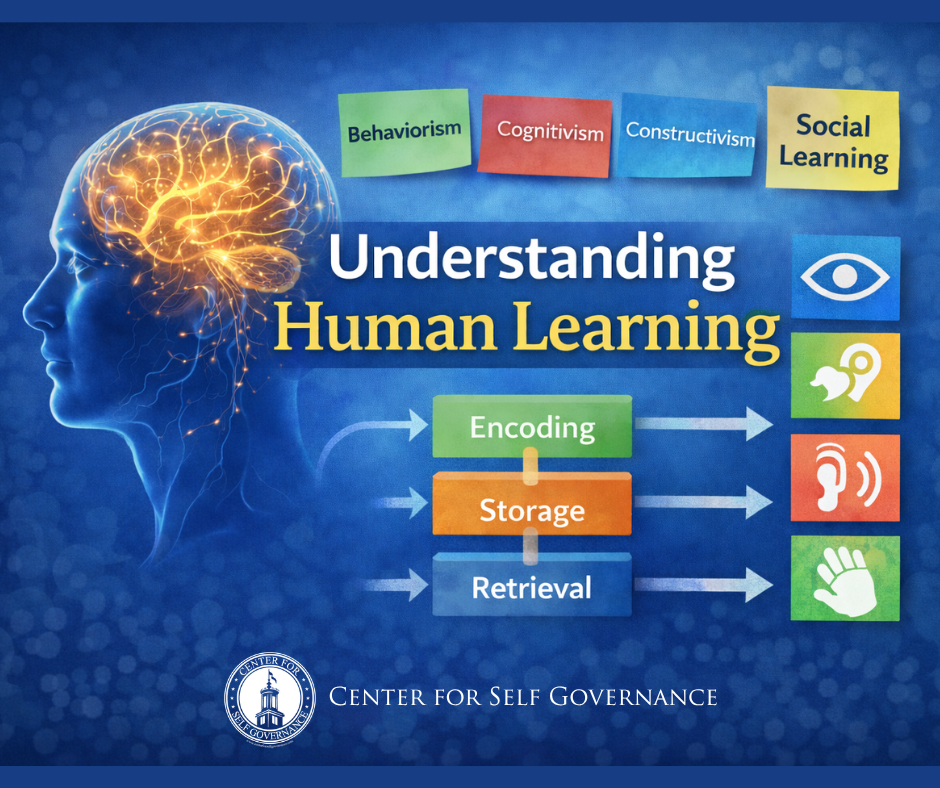
This course introduces students to the science and practice of human learning within the framework of Self Governance. Students will explore how the brain learns through neuroplasticity, examine the three stages of learning (encoding, storage, and retrieval), and analyze four major learning theories—behaviorism, cognitivism, constructivism, and social learning.
Through interactive lecture, group discussion, and guided self-reflection, students will identify common learning misconceptions and replace passive habits with structured, evidence-based strategies. Emphasis is placed on improving attention, strengthening memory, and applying multi-modal learning techniques that increase retention and performance.
By the end of the course, students will understand how learning works biologically and practically, and how to govern their own learning processes to improve decision-making, problem-solving, and leadership effectiveness.
Prerequisite
None
Key Learning Objectives
Students will:
- Understand how the brain learns, including neuroplasticity and memory formation
- Apply the three stages of learning: encoding, storage, and retrieval
- Compare and integrate four major learning theories and their practical applications
- Identify and correct ineffective learning habits such as passive review and rereading
- Distinguish between learning preferences and learning effectiveness
- Implement multi-modal learning strategies (visual, auditory, kinesthetic, and teaching)
- Develop the ability to actively govern their own learning for improved performance and leadership
Additional Notes
This course is part of the CSG Leadership in Self Governance training program and supports development at the Apprentice level. Interactive participation is encouraged, and students will complete guided reflections and practical exercises throughout the session.


Reviews
There are no reviews yet.